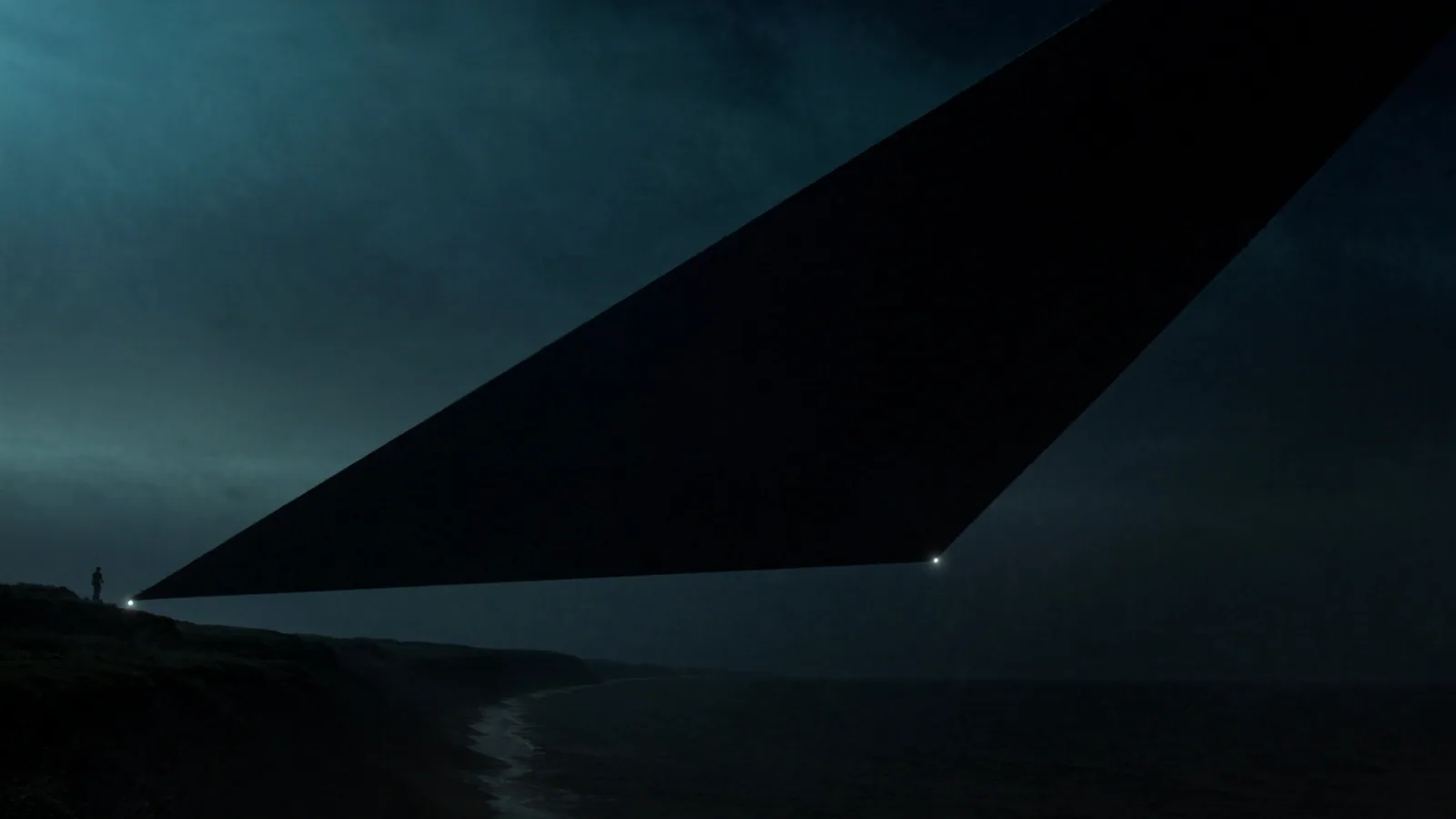
Triangle reports are common. They're also the category where the gap between a well-evidenced case and a confused one is widest. The difference is rarely about what the witness saw — it's about the details that surround the sighting. This post is a walk through what we look for when a triangle case lands in the investigations queue.
The shape is the easy part
Most adult observers can identify a triangular outline against a night sky. We don't lose much sleep over the geometry. What we lose sleep over is the context.
The questions we ask first, in roughly this order:
- How was the triangle defined to the observer — by an outline, or by three discrete points of light arranged that way?
- What was the altitude estimate, and how was it derived?
- Was there sound?
- Did it persist, and for how long?
The first two account for most of the misidentifications we see. The last two are where the cases get interesting.
Lights versus structure
If a witness saw three lights in a triangular arrangement and inferred a craft connecting them, that's a very different report from a witness who saw a solid dark mass with three lights along its edges. The inference matters.
"Three lights in formation" can be a lot of things: a flight of aircraft holding a stacked approach, a Starlink train at an unusual phase angle, even a brief tight grouping of unrelated traffic seen edge-on. "A solid black structure with three nav-style lights at the points" is a much narrower description and a much harder one to explain away.
We push reporters hard on this distinction. Not to argue with them, but because the reviewer two months down the line needs to know what was actually observed and what was inferred. Inference isn't bad — it's how we make sense of anything — but it has to be tagged so we can re-examine it later.
The altitude problem
Altitude estimates from the ground are notoriously bad. Without a known reference object — a known-altitude aircraft on the same approach line, a building, a hill of known elevation — the human eye is essentially guessing. We've seen 1,500-foot estimates that turned out to be 30,000-foot aircraft and 40,000-foot estimates that turned out to be a drone over a treeline.
When a report says "low altitude" without a reference, we treat the altitude field as unknown. When a report includes a reference object, the altitude estimate becomes useful. The most useful single thing a witness can do is include a foreground anchor — a building, a power line, a treeline — in their photo or written description.
The silence question
A lot of triangle reports describe the object as silent. This is the detail that does the most weight-lifting in either direction.
At low altitudes — say, anything under a few thousand feet — silence is genuinely strange. A craft with the mass needed to support its own structure and hold position against wind has to be doing work, and work at low altitude tends to be audible. When multiple independent observers all report no audible signature at altitudes where they should have heard something, that's a serious anomaly in the report. It's not proof of exotic origin, but it's the kind of detail that lifts a triangle case from "interesting" to "we should keep looking."
At high altitudes the question reverses. Above 10,000 feet, silence is the expectation, and a report that emphasises silence as anomalous is usually misjudging the altitude.
Duration as a forcing function
The longer an object persists, the more constraints any explanation has to satisfy. A two-second flash can be almost anything: an iridium flare, a meteor, a glint off a high-altitude airliner. A nine-minute persistent triangular formation has to be a thing that can sustain itself for nine minutes — which rules out most natural and almost all transient explanations.
Persistence also creates corroboration opportunities. A long-duration sighting is, by definition, a sighting other people had time to notice. Triangle reports that persist for more than three minutes are twelve times more likely to have a second independent witness file within a 24-hour window than reports under thirty seconds. The math is brutally consistent.
What a strong triangle report looks like
Stripped down to the essentials, a triangle case that survives review tends to have:
- A clear distinction between observed structure and inferred geometry.
- At least one reference object anchoring the altitude estimate.
- Explicit treatment of audibility — what the witness heard or didn't, and at what distance.
- Duration measured in minutes, not seconds.
- At least one corroborating witness whose account doesn't read like the first witness's.
None of that requires expensive equipment. It requires paying attention to the right things while the thing is happening, which is harder than it sounds — but it's also why we publish this kind of breakdown. If you ever find yourself looking at a triangle, this is the checklist worth running through in your head.
